

August 2026
From Investment-Grade Ideas to Decisions That Can Be Tested.
Over the past few months, one question has started to connect several different areas of my work.
How do we know that a strategic decision has actually improved the organisation, rather than simply producing more activity?
In June, I argued that understanding sustainability is not the same as leading it. Organisations can have commitments, targets, dashboards and investments without possessing the decision-making capability required to turn those resources into measurable value.
Since then, the work has moved further.
Across Sustainable Strategy Brief Live, the development of IGSOS, my higher education work, executive learning and recent research, the focus has increasingly shifted from frameworks to application, evidence and proof.
That matters because a methodology should face the same standard that we expect from the strategies it is designed to test.
It is not enough for the intellectual logic to sound credible.
“The next test is whether applying it to a consequential live decision makes that decision demonstrably stronger.”
Paul Phillips FRSA
IGSOS: The Next Stage Is Controlled Application
Over the summer, I have continued developing the Investment-Grade Sustainability Operating System, IGSOS.
The underlying problem it seeks to address is becoming clearer.
A significant strategic decision can have an attractive narrative and remain weak, because the evidence is incomplete, the economics are not sufficiently traced, the causal assumptions are unclear, ownership is dispersed, or implementation begins without an agreed mechanism for adapting when reality changes.
IGSOS is designed to turn consequential strategic and sustainability choices into decisions robust enough for capital, governance and implementation scrutiny. It connects evidence, economics, causal logic, ownership and action, and then tests whether the decision remains credible as implementation unfolds.
A business case can move too quickly from proposed action to claimed benefit. The stronger test is to trace the route through the organisation:
Proposed action → causal mechanism → direct effect → system effects → financial or institutional consequence → observable evidence
This matters because organisations are not collections of independent activities. An intervention in one area can alter capability, behaviour, workload, risk or economics elsewhere.
The next test for IGSOS is application. Architecture is not proof. The priority now is to apply the methodology to one material live decision, establish a baseline and assess whether it produces a more robust decision.
That is the proof base I now want to build.
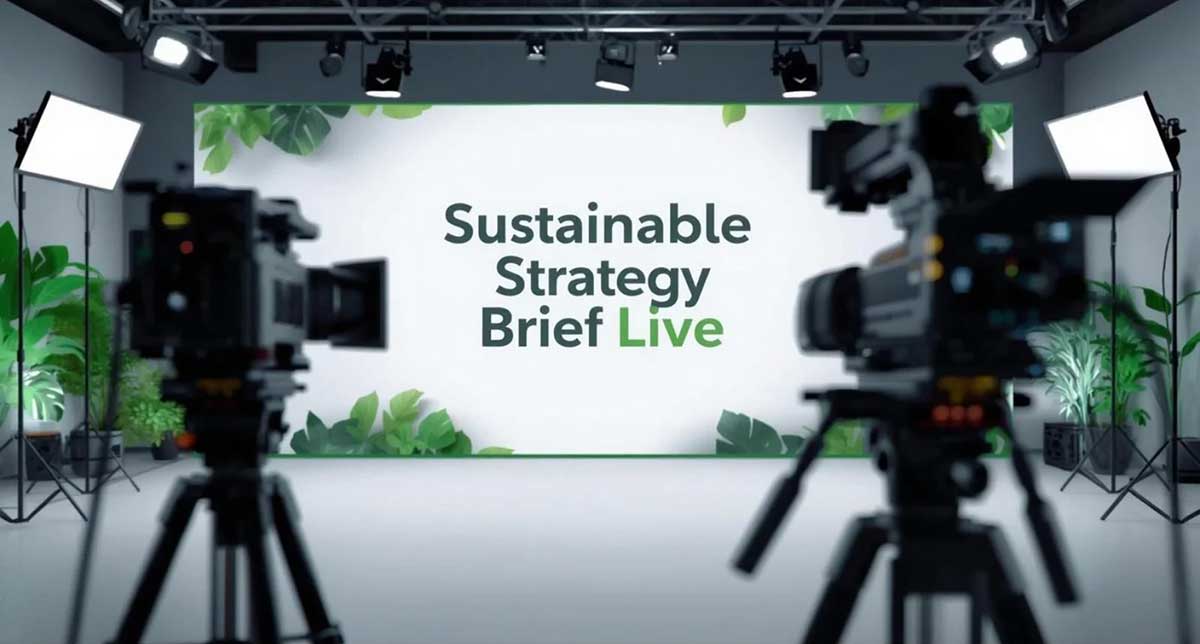
Sustainable Strategy Brief Live – From Broadcast to Executive Decisions
Sustainable Strategy Brief Live has also been evolving.
The first episodes moved from why sustainability must become part of strategy, to building credible business cases and testing value propositions, before asking what happens when a CFO or board scrutinises the economics, assumptions and ownership behind them.
The next higher education discussion takes that logic into a sector facing immediate choices around financial sustainability, academic portfolios, capability, digital investment and partnerships.
The question is not simply where expenditure can be reduced. It is:
What has actually changed in the underlying economic and institutional model?
A programme can close without removing enough cost. Headcount can fall while the same work remains. Technology can be purchased without workflows changing.
This is why the next SSBL discussion is being sharpened around portfolio, economics, capability and, critically, who owns the decision and its outcome.
I increasingly see SSBL as more than a broadcast. Its value will come from the quality of the executive questions it generates, the conversations those questions create, and whether those conversations reveal decisions worth testing.
That is the next standard I want SSBL to meet.
That progression was visible in Episode 4, where Guest Mark J Lumsdon-Taylor, Global Executive Lead, Development & Sustainability and Partner at MHA, Moderator Rob Smith, former Main Presenter, BBC South East; and I examined what happens when strategy assumptions come under greater scrutiny.
Next steps: If these themes resonated, do watch the clip in which the three of us discuss the topic.
“The shift is clear: sustainability is now operational, material and measurable. While the CSO sets the direction, the CFO enables execution.”
Boston Consulting Group, 2026

Executive Learning: The Participant Should Bring the Decision
Another part of the summer has been the continued development of my executive-education work.
At Reset Connect in June, my central argument was that understanding sustainability is not the same as leading it.
That distinction has become even more important.
Executive education often focuses heavily on knowledge transmission: frameworks, case studies, discussion and reflection.
Those all have value.
But for senior executives, I think the more demanding test is different:
What decision can the participant make better as a result of the programme?
That changes the architecture of executive learning.
Rather than attend a programme and subsequently search for opportunities to apply it, participants should increasingly arrive with a live organisational challenge.
The learning experience can then move through:
Insight → Diagnostic → Application → Challenge → Decision → Commitment
The output is not simply greater understanding. It is a stronger live case.
The SHIFT work presented at Reset Connect remains relevant here as an executive capability and learning framework, while IGSOS provides the broader discipline for testing consequential decisions.
The next proof requirement is therefore clear: can a participant’s decision be assessed before the programme, materially strengthened through it, and demonstrably improved afterwards?
Participant satisfaction matters. Decision improvement is a harder standard.
Want to strengthen one consequential decision before resources are committed?
Three ways to continue the conversation
- Bring one consequential decision
If your organisation has a live strategic decision where the evidence, economics, capability implications, ownership or implementation remain contested, I would be interested in exploring whether it provides an appropriate controlled test. - Explore an executive-learning proof cohort
If you lead executive or organisational development and want participants working on real decisions rather than generic cases, we can explore a focused cohort built around live organisational challenges and measurable decision improvement. - Join the next SSBL conversation
The next Sustainable Strategy Brief Live discussion will continue the move from general strategic commentary towards consequential executive decisions, including the financial sustainability and institutional choices now confronting higher education.
The purpose across all three routes is the same.
Move from interesting ideas to decisions that can be tested.
Warm regards, Paul
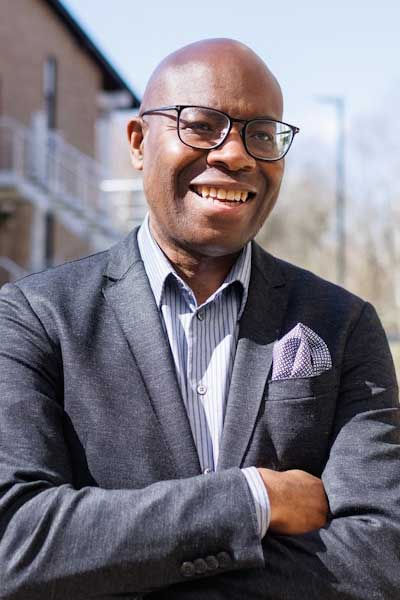
Dr. Paul A. Phillips
Dr Paul A. Phillips Professor of Strategic Management and practitioner with CEO/board-level delivery experience
Founder and CEO of Investment-Grade Strategy Partners.
Author of Sustainable Strategic Management: Leadership with Purpose (with Routledge).
Founder and Host of Sustainable Strategy Brief Live.