

January 2026
Turning sustainability growth ambition into credible business cases
“Demand for technologies that support climate resilience and adaptation could create a $1 trillion opportunity for private capital by 2030!“
McKinsey, 2025
McKinsey asserts that the changing world presents significant investment opportunities for investors to create value alongside resilience benefits.
Boardroom questions to open with
- What are our material physical climate risks and resilience dependencies mapped to our P&L?
- What is our ESG value proposition on resilience – are we simply reducing our footprint and risk, or are we enabling customers/communities to adapt?
- What are the 3–5 areas we must master to deliver credible business cases?
Turning sustainability growth ambition into credible business cases
Sustainable Strategy Brief Live – Episode 2
Episode 2: went live on January 14, 2026, with 493 people registered to join us.
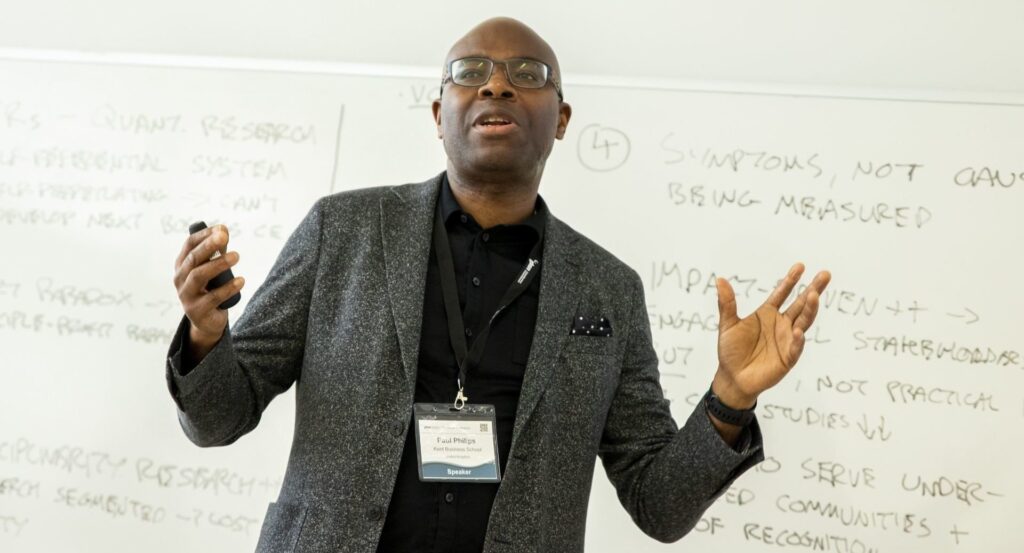
Next steps→ Do watch the short 2m. 10sec video in which Paul, Allen Cedeno, ESG & Sustainable Finance , Expert and Michael Baxter – The ESG Sho, provide some rich insights into sustainable ambition is necessary but insufficient for success
During Sustainable Strategy Brief Live we developed ten key lessons around – Turning sustainability growth ambition into credible business cases
Key Lessons
Here are ten lessons:
- Move from compliance language to capital logic – Can you explain the case in investor/CFO terms (cash, risk, WACC, unit economics) rather than solely ESG narrative?
- Capital logic beats compliance in funding decisions – Is the funding rationale explicitly tied to capital allocation criteria and strategic trade-offs?
- Finance must co-own the baseline – has Finance signed off the baseline, data verification, and the assumptions register?
- Model downside, not just upside – do you show downside scenarios, sensitivities, and what can disrupt the case?
- Pilot with controls, or don’t pilot – is the pilot designed with controls, measurement discipline, to ensure real impact?
- Use rigorous financial metrics (NPV/IRR/Payback) – are NPV/IRR and/or payback stated with cash timing and key assumptions?
- Write stop rules first – are explicit stop/scale thresholds written up-front with decision rights?
- 30/60/90 deliverable cadence – is there a 30/60/90 cadence with named deliverables and owners (not activities)?
- Audit where value leaks – have you quantified value leakage (waste, rework, claims risk, supplier hotspots) and targeted it? day cycles, not one-off hero projects – with around 70% of sustainability projects still failing to deliver, we argued for 30/60/90 day cycles that keep momentum visible quarter after quarter, instead of big-bang programmes that eventually stall.
- Reputation = revenue or risk, not feelings – is reputational impact expressed as revenue lift, risk reduction, or cost of capital—not sentiment?
“Today, 88 per cent of CEOs believe the business case for sustainability is stronger than it was five years ago.”
United Nations Global Compact – Accenture, 2025

The Three-Word Test for Investment-Grade Sustainability: Revenue, Resilience, Reputation.
Most “sustainable growth ambition” statements don’t fail because of the intent. They fail because they can’t survive the first hard funding conversation.
You’ve probably seen the pattern:
A business case may have a strong narrative. Then the CFO and/or investment committee ask three questions to determine whether it’s a decision-quality strategy or just an aspiration:
- What changes in the P&L?
- What risk comes off the balance sheet (or out of our downside)
- What do we stop doing if the evidence doesn’t show up?
Boards fund evidence, not ambition.
The decision-framing move that changes everything.
In the SSBL community, we keep coming back to a deceptively simple framing device: Is your sustainability agenda primarily about revenue, resilience, or reputation?
Leadership teams often try to claim all three. This leads to long decks, scattered initiatives, and no capital reallocation.
This often results in lots of activity but limited traction.
The solution isn’t better storytelling—pick the job first, then build investment-grade logic.
What does this look like?
The 3 Rs
- Revenue: customer value proposition, economic rationale, route-to-market, pricing power.
- Resilience: quantified risk reduction, controls, downside scenarios, insurance logic.
- Reputation: measurable trust outcomes, licence-to-operate milestones, governance guardrails.
Once you choose, the pathway becomes decision-quality: value driver → baseline → initiative → metric → decision gate. Now leaders can scale, adjust, or stop—based on results, not rhetoric.
A quick self-check you can run in 10 minutes
Ask your leadership team to answer these in one sentence each:
- Our primary driver is revenue / resilience / reputation because ___ .
- The one metric that proves it is working is ___ .
- Our baseline today is __ (with date + source).
- The first decision gate is in _ weeks, and we will scale/adjust/stop if ___ .
If you can’t answer these, you don’t have a strategy—you have a narrative.
Final call
Capital logic is not the enemy of sustainable strategy. It is what stops sustainable strategy from becoming expensive rhetoric.
In short:
- Capital Logic clarifies the case.
- Sprints create the evidence.
- Together, they make a sustainable strategy fundable.
To access the latest SSBL conversations and curated clips, follow Sustainable Strategy Brief Live and subscribe to the newsletter for future editions.
Remember
A sustainable strategy is not merely a statement of intent; it is a repeatable system for converting resources into advantage—measured in cost, revenue, risk, and trust. If these answers are unclear, the strategy is still too soft for capital.
Warm regards, Paul

Dr. Paul A. Phillips
Dr Paul A. Phillips Professor of Strategic Management and practitioner with CEO/board-level delivery experience
Founder and CEO of Investment-Grade Strategy Partners.
Author of Sustainable Strategic Management: Leadership with Purpose (with Routledge).
Founder and Host of Sustainable Strategy Brief Live.